Reading and Phonics
Reading
‘A book is a gift you can open again and again’ – Garrison Keillor
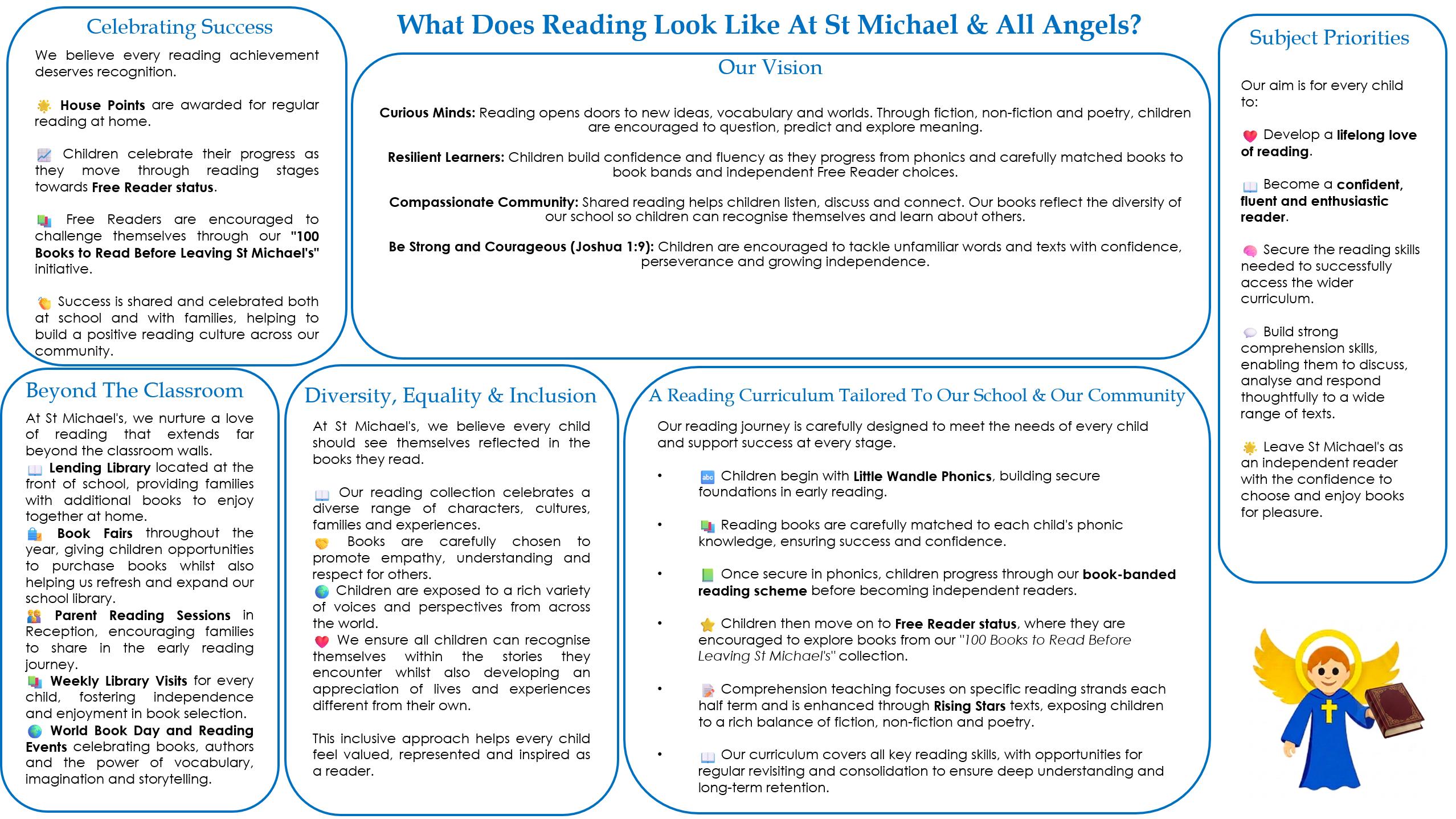
📖 What Does Reading Look Like at St Michael & All Angels?
At St Michael's, we believe that reading is the key that unlocks all learning. At the heart of our English curriculum is a commitment to developing a lifelong love of reading, inspiring children to become enthusiastic, confident and capable readers. Through high-quality texts, engaging learning experiences and carefully structured teaching, we encourage children to explore books of all kinds, broaden their understanding of the world and develop curiosity about the lives, cultures and experiences of others.
Our vision for English sets high expectations for every child, providing meaningful opportunities to speak, listen, read and write across the curriculum. From their first steps into phonics to becoming independent readers, we nurture curious minds, resilient learners and compassionate members of our community, ensuring every child develops the skills and confidence needed for future success.
Reading begins with our Little Wandle Letters and Sounds phonics programme, where children develop secure foundations in decoding, fluency and comprehension. As they progress through school, children encounter a rich variety of fiction, non-fiction and poetry, helping them become thoughtful readers who read not only for purpose, but also for pleasure.
We firmly believe that reading extends beyond the classroom. Strong partnerships with families, carefully matched reading books, shared reading experiences and a culture that celebrates books all help children develop confidence, independence and a genuine enjoyment of reading.
✨ Below, you can explore our Reading in a Nutshell overview, which provides a snapshot of how reading is taught across St Michael & All Angels and the journey our children take to become confident, fluent and enthusiastic lifelong readers.
📄 Further Information & Useful Documents
Pupil thoughts on Reading at St Michaels

🔤 Phonics at St Michael & All Angels
At St Michael & All Angels, we believe that every child can become a confident, fluent reader and writer. Strong early reading skills provide the foundation for future learning, which is why we teach phonics through the highly effective Little Wandle Letters and Sounds Revised programme.
Our phonics journey begins in Reception, with children in our Pre-School first accessing Foundations for Phonics, helping them develop the early communication, listening and language skills needed for successful phonics learning. We follow the Little Wandle progression carefully, ensuring children build their knowledge of sounds, letters and words in a structured and systematic way.
As children progress through school, they develop the skills and confidence to decode, read and spell unfamiliar words independently, enabling them to access an increasingly wide range of texts. Phonics is not taught in isolation; it is woven throughout our curriculum and applied daily through shared reading, writing and meaningful learning experiences across all subjects.
We place a strong emphasis on speaking, listening and vocabulary development, recognising that language is the foundation of both reading and writing. Through rich discussion, storytelling, language exploration and high-quality texts, children develop the communication skills needed to become successful readers, writers and lifelong learners.
By fostering confidence, fluency and a love of language from the very beginning, we equip our children with the skills they need to thrive both in school and beyond.
-
Little Wandle Letter and Sounds Information for Parents in EYFS and Y1 The resources on this page will help you support your child with saying their sounds and writing their letters. There are also some useful videos so you can see how they are taught at school and feel confident about supporting their reading at home.
Phonics and Early Reading
Reading Comprehension
At St Michael and All Angels, we value reading as a crucial life skill. We aspire for all our children to read confidently for meaning and regularly enjoy reading for pleasure. Our readers are equipped with the tools to tackle unfamiliar vocabulary. We encourage our children to see themselves as readers for both pleasure and purpose.
Reading at Home
Although your child will be taught to read at school, you can have a huge impact on their reading journey by continuing their practice at home.
There are two types of reading book that your child may bring home:
A reading practice book. This will be at the correct phonic stage for your child. They should be able to read this fluently and independently. This book has been carefully matched to your child’s current reading level. If your child is reading it with little help, please don’t worry that it’s too easy – your child needs to develop fluency and confidence in reading. Listen to them read the book. Remember to give them lots of praise – celebrate their success! If they can’t read a word, read it to them. After they have finished, talk about the book together.
A sharing book. Your child may not be able to read this on their own. This book is for you both to read and enjoy together. In order to encourage your child to become a lifelong reader, it is important that they learn to read for pleasure. The sharing book is a book they have chosen for you to enjoy together.
Please remember that you shouldn’t expect your child to read this alone. Read it to or with them. Discuss the pictures, enjoy the story, predict what might happen next, use different voices for the characters, explore the facts in a non-fiction book. The main thing is that you have fun!
-
Tips for reading with your child Sharing a book with a child is fun! It's a time for closeness, laughing and talking together – and it can also give children a flying start in life and help them become lifelong readers. If you’re not feeling confident about reading aloud or sharing books, don’t worry – there’s no right or wrong way to enjoy a story together. But if you’d like some tips, here are a few pointers to help you out.
- Supporting Readers at Home Poster
- Book Chat Poster
- Book Chat Guide
- Everybody Read Leaflet for Parents


